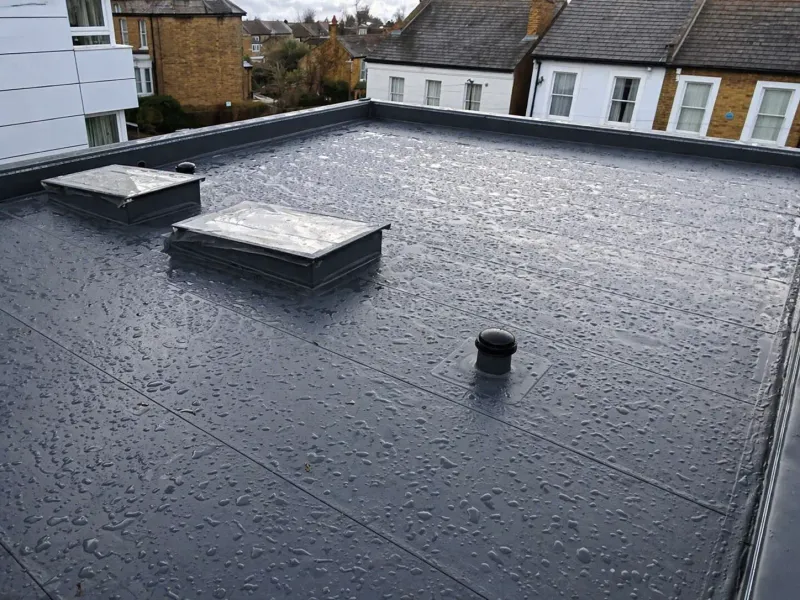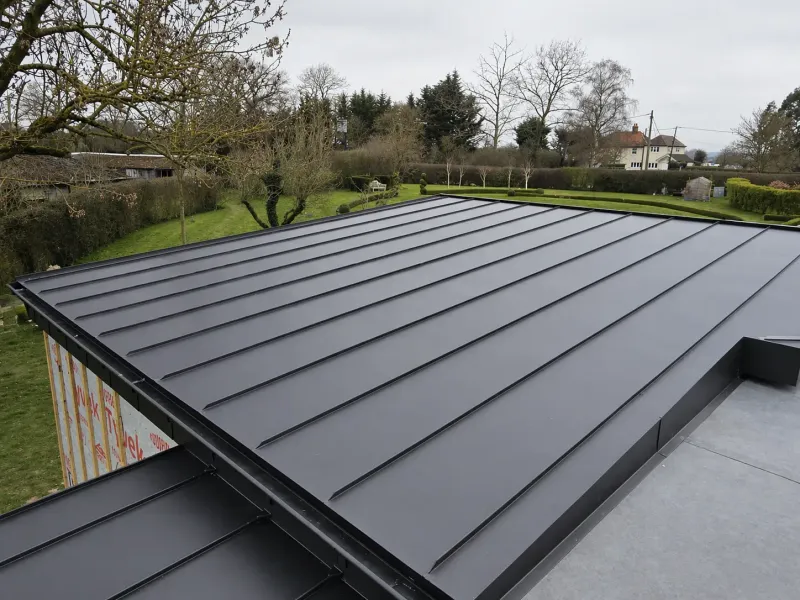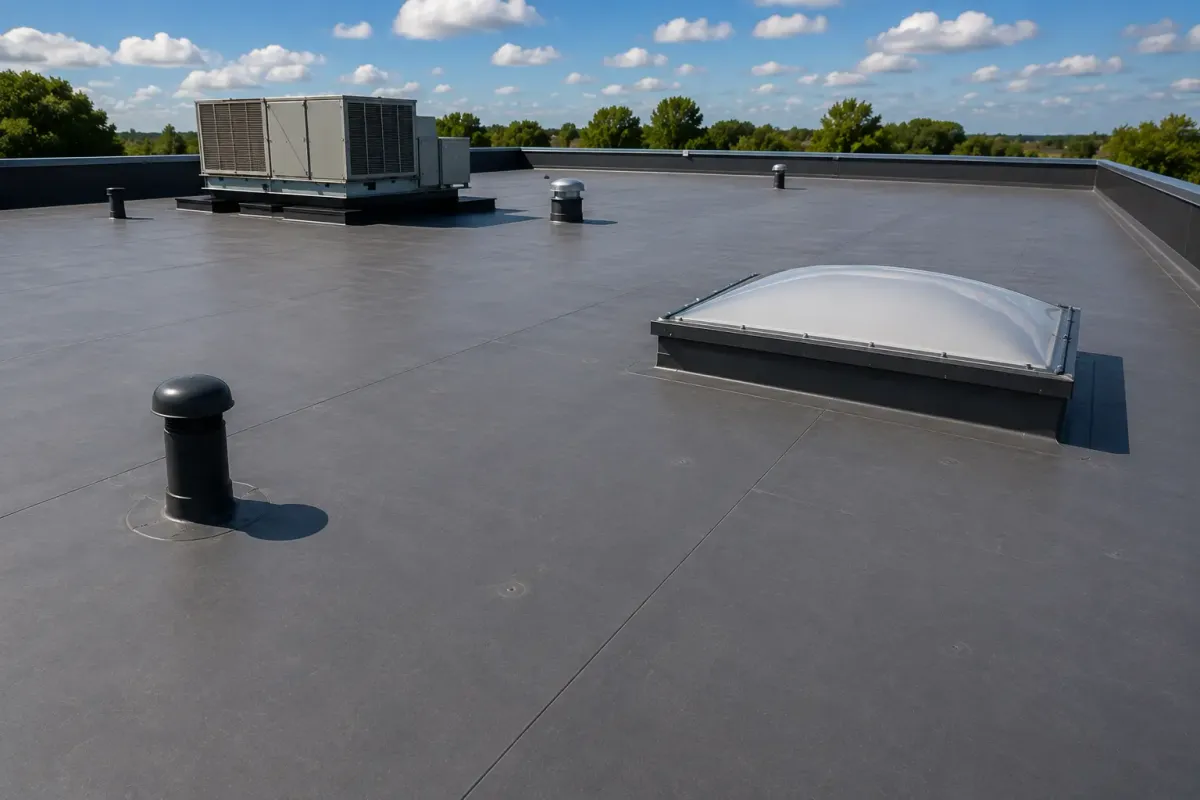
Single ply is one of the more accessible flat roofing options on cost, but the installed price still depends heavily on membrane type, roof size, and detailing. If you’re looking for a ballpark figure, this guide will get you there — and explain why two roofs with the same square metre area can price very differently.
A realistic figure depends on the roof size, membrane type, fixing method, insulation build-up, detailing, and access. One roof may be a simple rectangular flat roof; another has upstands, multiple penetrations, awkward access, or complex junctions.
This guide explains what affects the cost so you can understand where the money goes before asking for a quotation. If you’ve been quoted a figure that surprised you, or you’re not sure what to expect, this should help.
The short answer
As a rule, single ply membrane roofing sits below metal roofing systems on upfront cost, making it a practical choice for flat and low-pitch applications where budget is a factor.
As a rough guide, installed single ply roofing in the UK typically starts from around £130–£150/m² for a straightforward roof plane but can be more for complex roofs with upstands, multiple penetrations, or restricted access. These figures include labour, membrane, and basic detailing but not insulation upgrades or scaffolding. Every project needs a proper quotation — but these ranges help you sense-check what you’re quoted.
The installed price varies because a single ply roof is a system, not just a membrane. A proper quotation needs to account for:
- the membrane itself (TPO, PVC, or EPDM)
- the fixing method — mechanically fixed, fully adhered, or ballasted
- insulation and vapour control layer
- tapered insulation where falls need to be created
- upstand and abutment detailing, outlets, and penetrations
- labour time for welding, bonding, and detailing
- scaffolding, access, and waste removal
For homeowners and commercial clients comparing options, the key point: single ply’s lower material cost makes it one of the more cost-effective ways to weatherproof a flat roof, provided the detailing is done properly.
Why single ply pricing varies
Single ply roofing is a membrane system, and performance depends almost entirely on the detailing rather than the field membrane itself. Installers need to understand how the chosen membrane is jointed, how outlets and upstands are formed, and how the full build-up works together.
The three common fixing methods each carry different labour and material implications:
- Mechanically fixed systems are fastened through to the deck and are often the most straightforward on larger, simple roofs.
- Fully adhered systems are bonded directly to the substrate, giving a smooth finish but requiring more preparation.
- Ballasted systems use a loose-laid membrane held down with stone or paving, which adds material cost but can suit specific site conditions.
The labour is skilled work. Upstands, outlets, penetrations, and corners are where most flat roof failures begin, so they cannot be treated as afterthoughts. On a simple roof, installation can be efficient. On a roof with several penetrations or a complex perimeter, detailing time becomes a major part of the cost.
Main factors that affect single ply roof cost
Roof size
Small roofs often cost more per square metre than larger roofs because setup, access, ordering, and detailing still need to happen. A small roof may use little material, but it can still involve the same number of upstands and outlets as a much larger one.
Larger simple roof planes are usually more efficient, particularly where the layout allows long, uninterrupted membrane runs.
Membrane type
TPO, PVC, and EPDM carry different material costs and are suited to different situations:
- TPO is a common, cost-effective choice with good UV resistance, suited to larger commercial and residential roofs.
- PVC carries a similar cost to TPO but offers stronger chemical and fire resistance, relevant near flues or extraction.
- EPDM is typically supplied in larger sheets to minimise joints, which can suit smaller, more complex residential roofs but may carry a different cost profile depending on sheet size and layout.
Falls, drainage, and insulation
A minimum fall of 1:80 is generally required for positive drainage. Where the structural deck is flat, tapered insulation is used to create falls — this adds cost compared with a roof that already has adequate fall built in.
Insulation thickness and specification also affect cost, particularly where current Building Regulations require a higher U-value than an existing roof provides.
Detailing complexity
Costs rise where the roof includes:
- multiple upstands and abutments
- rooflights or plant penetrations
- internal or box gutters
- changes of level
- complex perimeter shapes
These details are not a problem for single ply, but they do take time to form and weld or bond correctly.
Installing over an existing roof
Single ply can often be installed over an existing flat roof substrate, which can reduce cost compared with a full strip-back. However, if the existing deck is not structurally sound or adequately prepared, the existing covering may need to be removed first — this is assessed on site rather than assumed from drawings.
Access and site conditions
Access can change the cost significantly. A rear extension roof in a tight London terrace is not the same as a ground-level commercial unit with direct access.
Quotations may need to account for:
- scaffold or access equipment
- restricted side access
- material storage and handling
- coordination with other trades
These are practical costs rather than membrane-specific costs, but they affect the final number.
Is single ply worth the cost?
Single ply makes most sense where a flat or low-pitch roof needs reliable waterproofing at a more accessible price point than a metal system. It is especially well suited to:
- flat-roofed extensions
- commercial and industrial flat roofs
- refurbishment projects installed over a sound existing deck
- projects where the roof is not a visible architectural feature
If the roof is visible and a metal finish is preferred for its appearance and lifespan, our single-ply vs metal flat roof replacement guide sets out the cost, lifespan, and appearance trade-offs in more detail.
How to get a useful single ply roof quote
Useful quotations are based on drawings, photographs, access information, and a clear scope. Before asking for a price, gather:
- roof dimensions or drawings
- current fall or lack of fall
- outlet and penetration positions
- insulation requirements
- photographs of the existing roof and access
- whether scaffold or access equipment is already included by another contractor
This helps avoid vague estimates and makes it easier to compare quotations fairly.
Talk to MET-TEC
We install single ply roofing across London and the South East, including extensions, refurbishments, and commercial flat roofs.
If you want to understand whether single ply works for your project and budget, get in touch. We can review drawings or photographs, explain the likely cost drivers, and give a practical steer before the specification is fixed. There’s no obligation — just a straight conversation about whether single ply is the right call for your project.