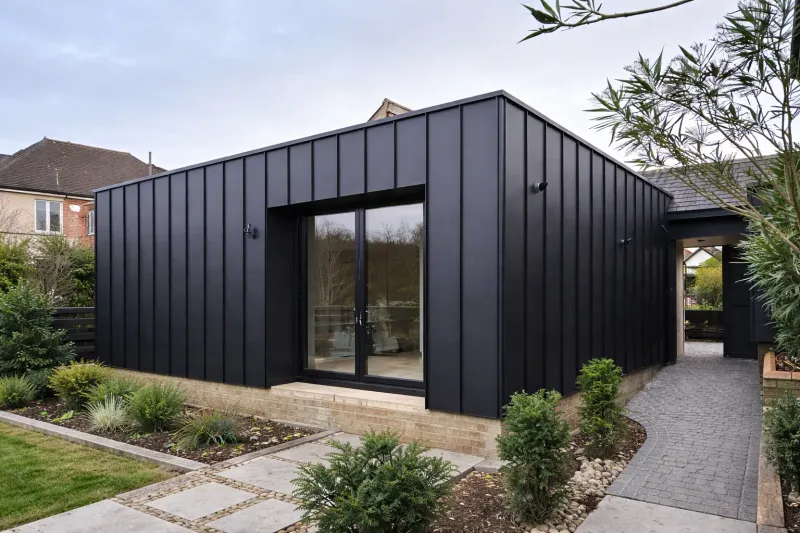
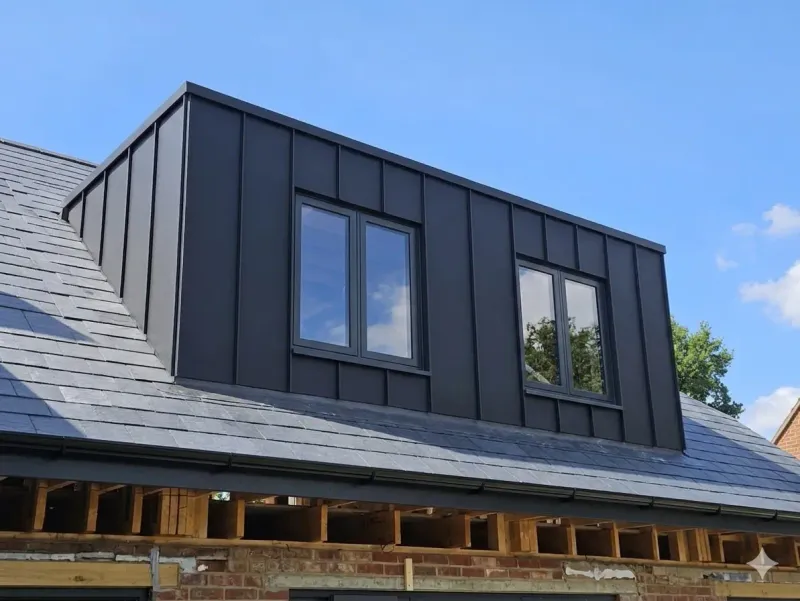
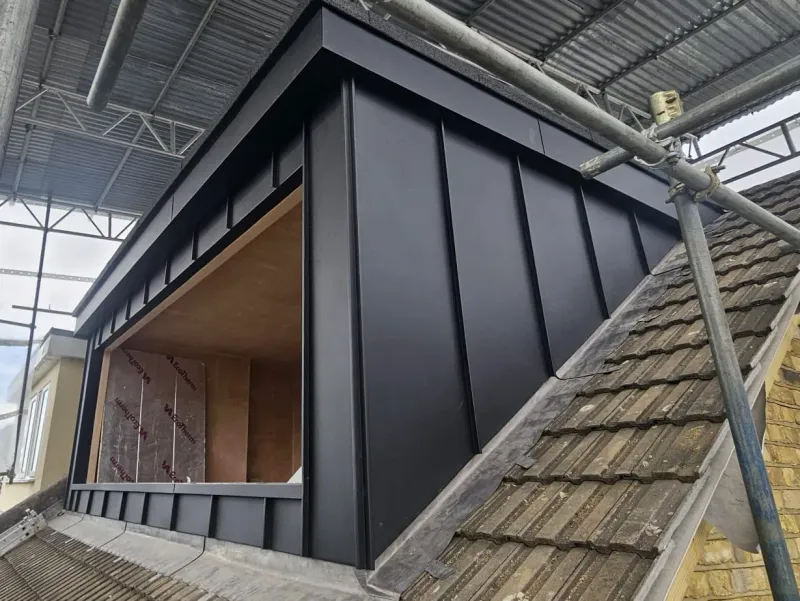
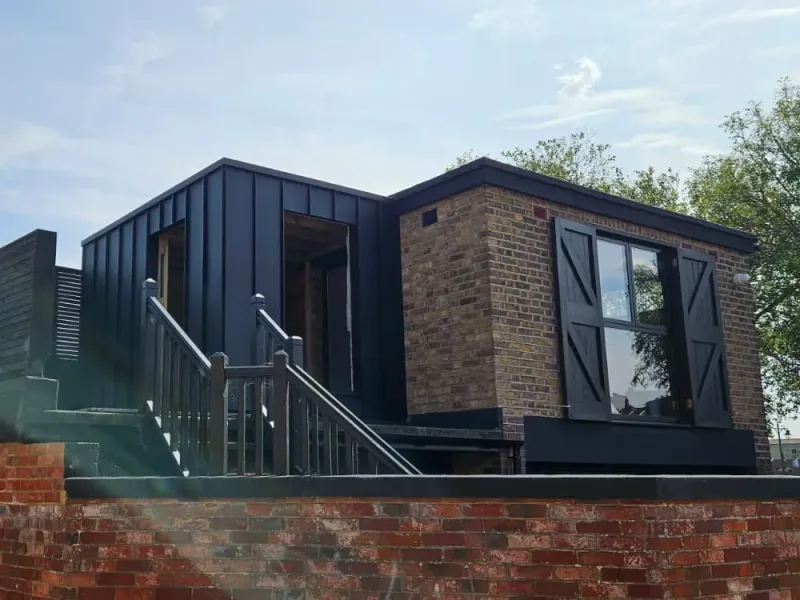
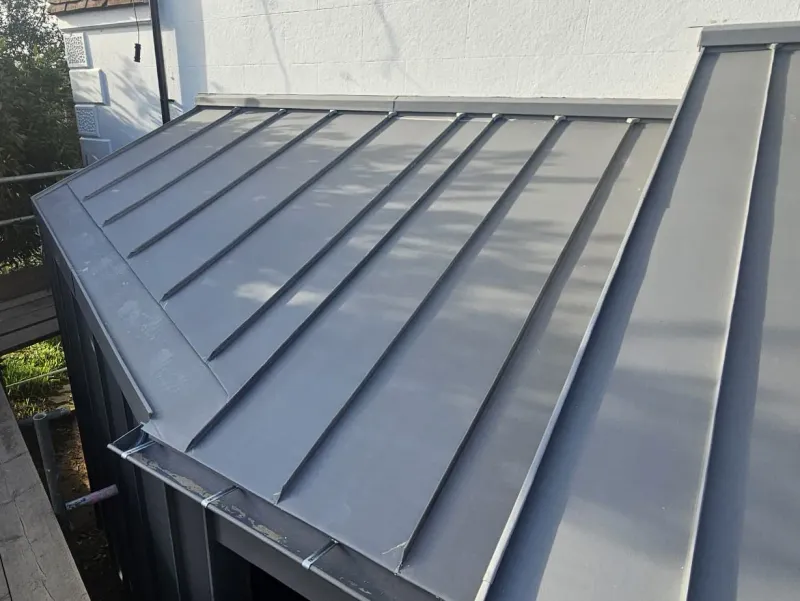
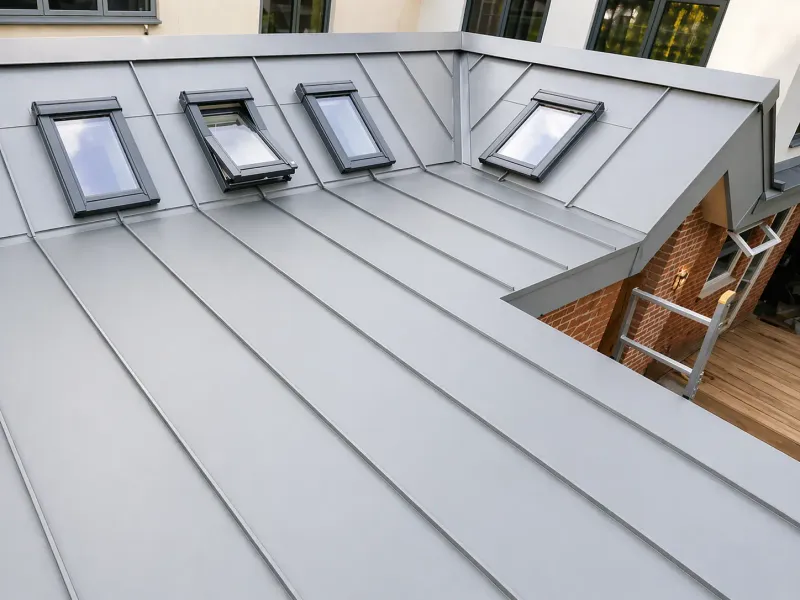
Aluminium is one of the lightest metal roofing materials available — and one of the most practical. It does not rust, needs very little maintenance, and can be powder-coated in a wide range of colours to suit both contemporary and traditional design briefs.
Why Choose Aluminium?
Aluminium combines a strong strength-to-weight ratio with natural corrosion resistance. Because it forms a protective oxide layer, it does not corrode in the way ferrous metals can — making it especially reliable in exposed or coastal locations when correctly specified.
- Excellent corrosion resistance — no rust
- Lightweight, reducing structural load
- High reflectivity improves energy efficiency
- Available in a wide range of profiles and finishes
Applications
Aluminium is well suited to both residential and commercial projects. From standing seam roofing to cladding systems, it adapts to a variety of architectural styles and performs well in all weather conditions.
Its modern aesthetic makes it a popular choice for contemporary builds, while its practicality ensures long-term value.
Performance and Lifespan
Aluminium expands and contracts more than some other metals, so the support build-up, fixing method, and detailing need to be designed correctly from the start. When that is done well, it provides a clean, dependable finish with very little ongoing maintenance.
For clients choosing a pre-finished system, aluminium also offers excellent consistency of appearance. Powder-coated and coil-coated finishes can provide a crisp architectural look across roofs, facades, soffits, and feature details.
Where Aluminium Works Best
Aluminium is often specified on contemporary extensions, garden rooms, apartment developments, and commercial projects where a lightweight external envelope is an advantage. It is also well suited to refurbishment work, particularly where existing structures benefit from a lighter material than tile or heavier sheet systems.
Because it can be formed into long panels and supplied in a wide range of colours, it works well for projects that want a more minimal, precise visual language. Standing seam profiles are especially popular where the aim is to create strong shadow lines and a modern finish without introducing unnecessary weight.
It can also be a smart choice for coastal or high-exposure locations, provided the right grade, coating, and specification are used. In those settings, getting the detailing right around edges, junctions, and interfaces is just as important as choosing the material itself.
What to Consider Before Choosing Aluminium
Aluminium is not simply a case of picking a colour and profile. The substrate, ventilation strategy, roof pitch, and movement allowance all influence long-term performance. This is particularly important on larger panel runs and on details where several materials meet.
Budget is another consideration. Aluminium often sits in a middle ground between premium natural metals and more cost-driven coated steel systems. For many clients, that makes it a strong balance of appearance, longevity, and flexibility.
As a rough guide, installed aluminium roofing in the UK typically starts from around £140–£150/m² for a straightforward roof plane, rising for complex roofs with rooflights, parapets, or restricted access. These figures include labour, substrate, and basic trims but not insulation or scaffolding — every project needs a proper quotation, but this range helps you sense-check what you’re quoted.
If aluminium looks like the right fit, we can advise on profiles, detailing, and build-ups — and compare it honestly against zinc, steel, copper, and single ply so the final choice suits both the design and the practical constraints of the build. Get in touch to discuss your project.
For extension projects where the choice is between natural grey zinc and a pre-finished aluminium system, see our zinc vs aluminium roofing guide. It covers cost, appearance, lifespan, colour options, and planning context.