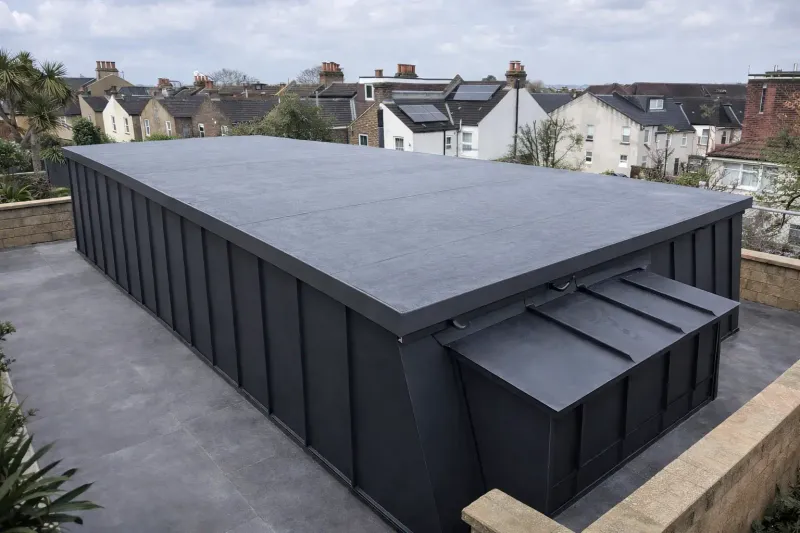
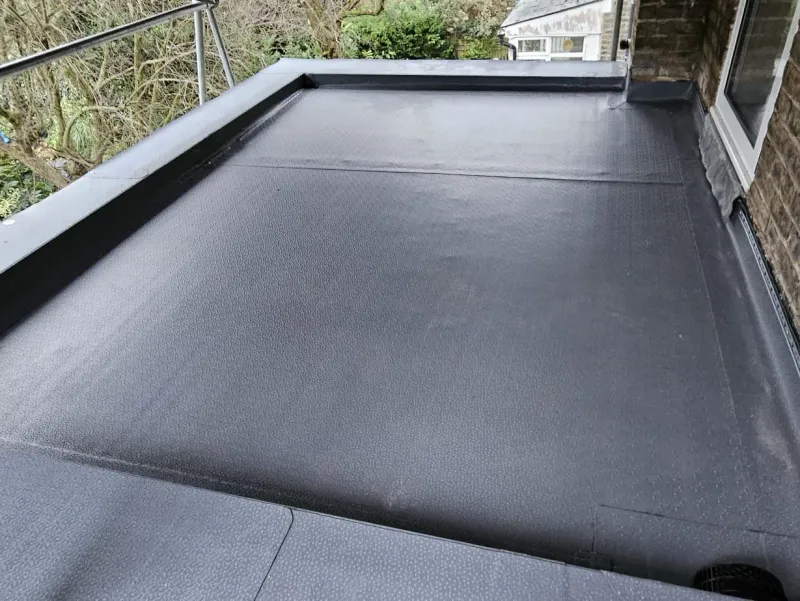
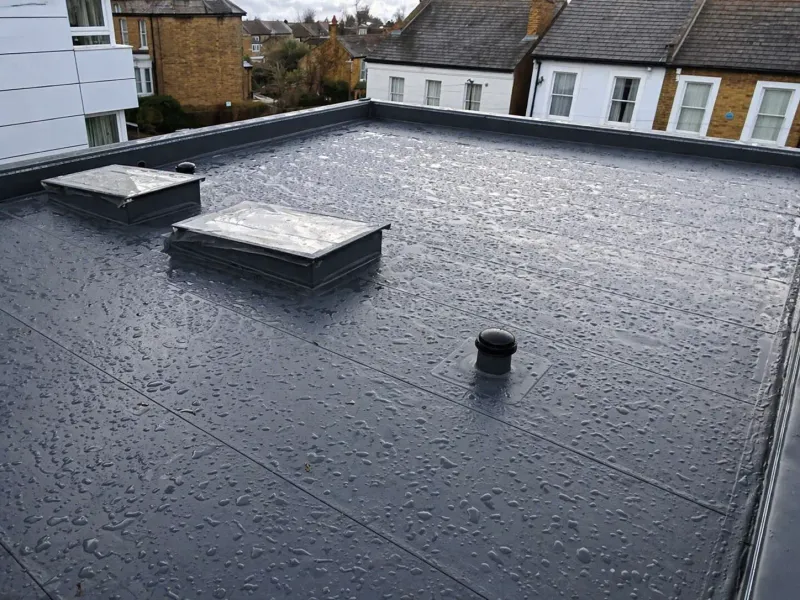
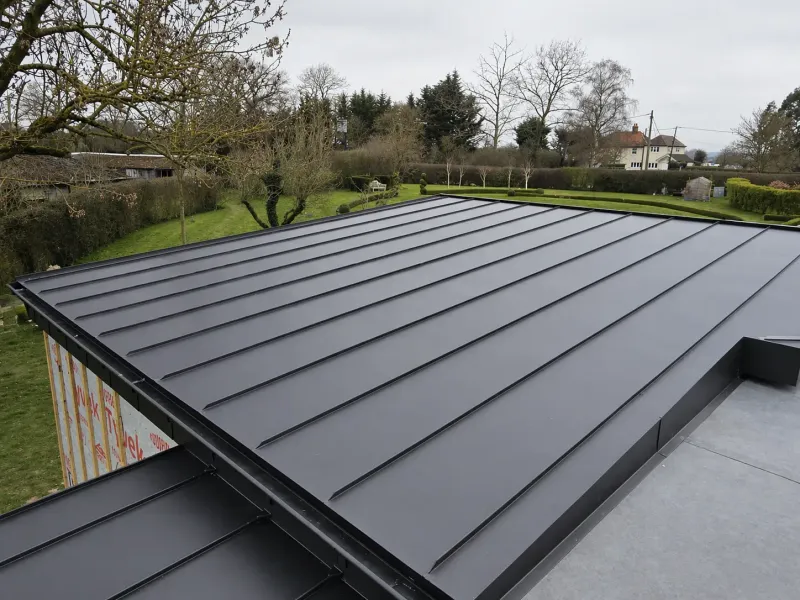
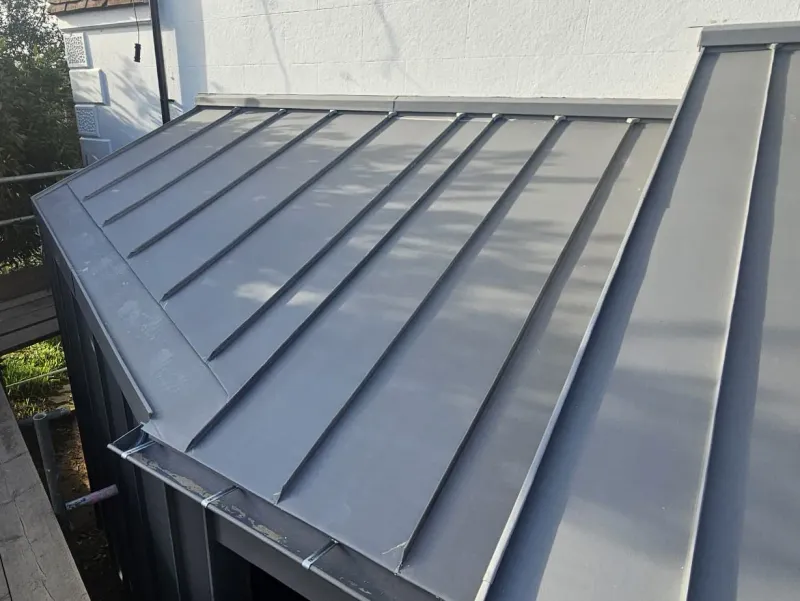
Single ply is a membrane waterproofing system for flat and low-pitch roofs, built from a single layer of synthetic material rather than multiple bonded layers. The membrane type, the fixing method, and the quality of the detailing at every junction determine how the finished roof performs — the specification matters more than the material itself.
Membrane Types
Single ply covers a family of related but distinct products, and the right choice depends on the project.
- TPO (thermoplastic polyolefin) — heat-welded seams, good UV resistance, and a lighter environmental footprint than PVC. A common choice on commercial and larger residential projects.
- PVC (polyvinyl chloride) — also heat-welded, with a long track record and strong resistance to chemicals and fire spread, which suits projects near flues, plant, or restaurant extraction.
- EPDM (rubber membrane) — adhered rather than welded, typically supplied in large sheets to minimise joints. Well suited to smaller, more complex residential roofs where minimising seams matters.
Each system has its own jointing method, compatible accessories, and manufacturer detailing standards. Mixing components across manufacturers is rarely a good idea — warranties and performance are usually tied to using a complete, matched system.
Fixing Methods
Single ply membranes are installed using one of three approaches, chosen to suit the substrate, wind loading, and roof layout:
- Mechanically fixed — the membrane is fastened through to the deck at defined centres and the joints are sealed over the top. Common on larger commercial roofs.
- Fully adhered — the membrane is bonded directly to the substrate or insulation, giving a smooth, low-profile finish. Often preferred on visible or architecturally detailed roofs.
- Ballasted — the membrane is loose-laid and held down with a ballast layer such as stone or paving. Less common on residential work but used where fixings or adhesives are impractical.
The choice affects wind uplift resistance, the achievable finish, and how the roof integrates with rooflights, plant, and edge trims.
Specification and Build-Up
Performance depends on the full roof build-up, not the membrane alone. Insulation choice and thickness, vapour control layer position, drainage design, and the deck itself all need to be right before the membrane goes down. A warm roof construction — insulation above the structural deck — is the standard approach on most modern single ply roofs, and it needs to be designed as a coherent system rather than assembled from generic components.
A minimum fall of 1:80 is generally required for positive drainage, with tapered insulation often used to create falls where the structural deck itself is flat.
Detailing Standards
The quality of a single ply roof is determined almost entirely by the detailing, not the field membrane. The areas that matter most:
- Upstands and abutments — membrane needs to be dressed up any adjoining wall or kerb to a minimum height, with a mechanically fixed termination bar or trim to hold it in place.
- Outlets and drainage points — outlets need to sit at the lowest point of each drainage area, with the membrane correctly formed and welded or bonded around them to avoid a future leak path.
- Penetrations — pipes, rooflight kerbs, and plant supports all need purpose-made details, not improvised site solutions.
- Corners and changes of level — pre-formed corners or correctly welded site-formed corners reduce the risk of splits opening up over time.
A single ply roof can look deceptively simple once installed, but its long-term reliability comes down to whether these details were executed correctly.
Installing Over an Existing Roof
Single ply can often be installed over an existing flat roof substrate, provided the existing deck is structurally sound, dry, and adequately prepared. In some cases the existing covering needs to be stripped back before the new system goes down — this is assessed on site rather than assumed from drawings.
Cost
As a rough guide, installed single ply roofing in the UK typically starts from around £133–£150/m² for a straightforward roof plane, rising for complex roofs with upstands, multiple penetrations, or restricted access. These figures include labour, membrane, and basic detailing but not insulation upgrades or scaffolding — every project needs a proper quotation, but this range helps you sense-check what you’re quoted.
If you are still deciding whether single ply or metal is the better fit for your project, our single-ply vs metal flat roof replacement guide sets out the cost, lifespan, and appearance trade-offs.
If single ply looks like the right specification for your project, we can confirm the membrane type, fixing method, and full build-up. Get in touch to discuss your requirements.